
AI and Automation: Has the Future of Work Arrived?
Artificial intelligence and automation are already transforming the job market and raising an important question: is the future of work already here? In this article, we explore how these technologies impact different professions, which tasks are being replaced or optimized, and what new opportunities are emerging. Understand the challenges, benefits, and how to prepare for this scenario that combines innovation, productivity, and new forms of professional practice.
9/26/20251 min read


Introduction
The rise of Artificial Intelligence (AI) and automation is reshaping the way we work. Repetitive tasks are now handled by machines and software, while new professions are emerging. But the big question is: has the future of work already arrived, or are we still in transition?
This article explores how AI and automation are impacting careers, which industries are being transformed, and how professionals can prepare for this new reality.
How AI and Automation Are Changing Work
Replacing repetitive tasks: administrative work, customer service, and basic data analysis are already automated.
New professional roles: growing demand for AI specialists, data scientists, and cybersecurity experts.
Human-machine collaboration: in many cases, AI supports faster, more accurate decision-making rather than replacing jobs entirely.
Industries Most Impacted in 2025
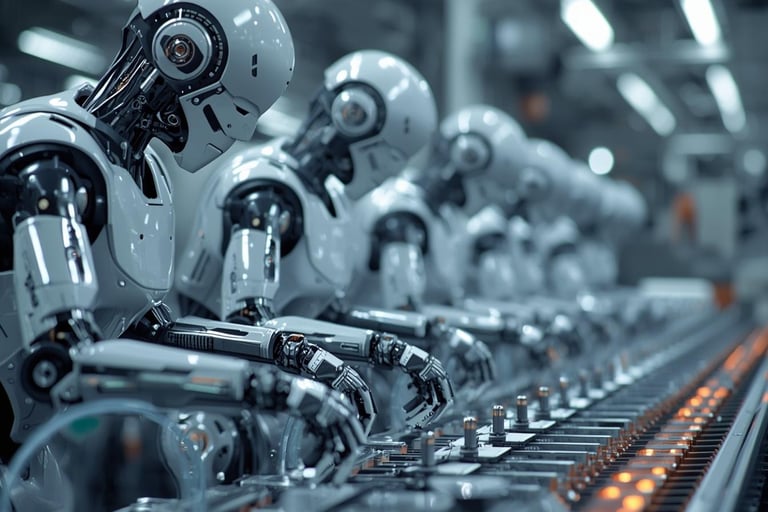
Manufacturing: smart robots in production lines.
Finance: predictive risk and fraud analysis.
Marketing and sales: automated campaigns and chatbots.
Healthcare: AI-assisted diagnostics and telemedicine.
Education: personalized learning platforms.
Benefits for Professionals and Businesses
Increased productivity.
Lower operational costs.
More accurate decision-making.
Creation of new career opportunities.
Challenges and Concerns
Job displacement in operational roles.
Need for massive reskilling.
Ethics and data privacy concerns.
Technological inequality between regions and companies.
How to Prepare for the Future of Work
Invest in digital skills (data analysis, programming, automation).
Develop soft skills such as creativity, empathy, and critical thinking.
Stay updated on market trends to remain competitive.
Embrace AI as a support tool rather than a threat.
Conclusion
The future of work is already here—and AI and automation are at the center of this transformation. Professionals who adapt quickly will gain a competitive edge in an evolving job market.
👉 Are you ready to work side by side with artificial intelligence?
Connect
Want to stay up-to-date on the future of technology? Keep following our content and prepare to lead in the age of automation.
Contato
Newsletter
tecnoia.org@gmail.com
© 2025. All rights reserved.